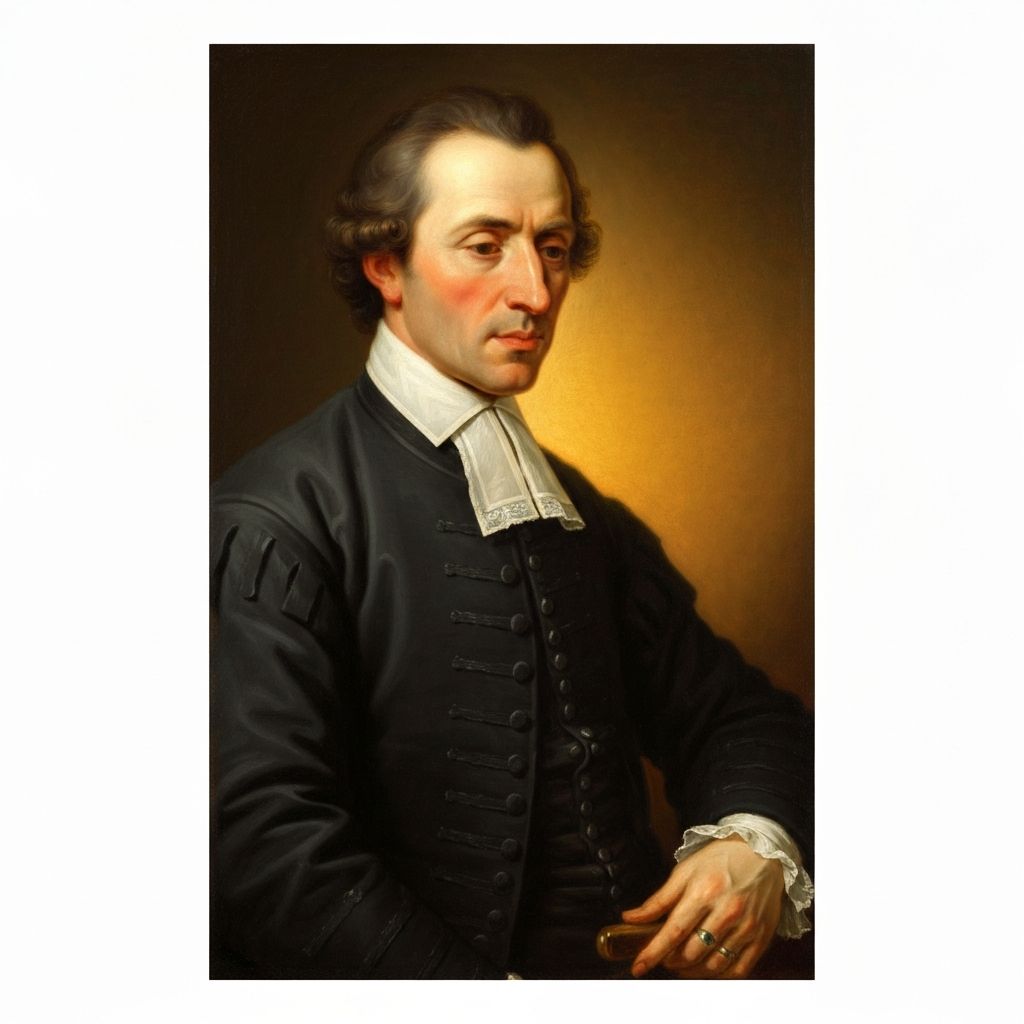
Blaze Pastel
A celebration of Blaise Pascal — mathematician, physicist, philosopher, and the inspiration behind one of computing's most beloved languages.
program BlazePastel;{ A tribute to the genius of Blaise Pascal }usesMathematics, Philosophy, Physics, Faith;constBIRTH_YEAR = 1623;DEATH_YEAR = 1662;LEGACY = 'Eternal';beginwriteln('Welcome to Blaze Pastel');writeln('The story of a brilliant mind');end.
procedure TheBiography;
Blaise Pascal lived only 39 years, yet his contributions to mathematics, physics, and philosophy continue to shape our world.
Early Life & Education
procedure EarlyLife;{ Born in Clermont-Ferrand, France }varBirthDate: TDate;Father: string;Siblings: array[1..3] of string;beginBirthDate := '19 June 1623';Father := 'Etienne Pascal';Siblings[1] := 'Gilberte';Siblings[2] := 'Jacqueline';{ Mother died when Blaise was 3 }writeln('Raised by father, a tax commissioner');writeln('and talented mathematician himself');{ A child prodigy emerges }if Age = 12 thenDiscoverGeometry(Independently);if Age = 16 thenWriteTheorem('Projective Geometry');end;
Born to Etienne Pascal, a local judge and tax commissioner with scientific interests, Blaise was a child prodigy. By age 12, he had independently discovered that the sum of the angles of a triangle equals 180 degrees. At 16, he wrote a significant treatise on projective geometry, establishing what is now known as Pascal's theorem.
Major Achievements
function ListAchievements: TStringList;{ The remarkable works of Pascal }beginResult := TStringList.Create;{ Mathematics }Result.Add('Pascals Triangle');Result.Add('Probability Theory');Result.Add('Projective Geometry');{ Physics }Result.Add('Pascals Law of Pressure');Result.Add('Studies on Vacuum');Result.Add('Atmospheric Pressure');{ Inventions }Result.Add('Pascaline Calculator');Result.Add('Roulette Machine');Result.Add('Public Transportation');{ Philosophy & Theology }Result.Add('Pensees');Result.Add('Provincial Letters');Result.Add('Pascals Wager');end;
Pascal's contributions span an incredible breadth. He invented one of the first mechanical calculators (the Pascaline), laid foundations for probability theory with Fermat, established principles of fluid dynamics, and wrote profound philosophical works that still resonate today.
for 1623 to 1662 do
A chronological journey through the life and works of Pascal
Birth
Born on June 19 in Clermont-Ferrand, France
Move to Paris
Family relocates to Paris; Etienne dedicates himself to educating Blaise
Geometry Discovery
At age 12, independently discovers Euclid's 32nd proposition
Pascal's Theorem
At 16, writes 'Essay on Conics' introducing Pascal's theorem
Pascaline Invented
Begins work on the mechanical calculator to help his father with taxes
Religious Conversion
First conversion to Jansenism after father's accident
Vacuum Experiments
Conducts experiments proving the existence of vacuum
Puy-de-Dôme Experiment
Famous experiment proving atmospheric pressure varies with altitude
Probability Theory
Correspondence with Fermat lays foundation for probability theory
Night of Fire
Profound religious experience leads to definitive conversion
Provincial Letters
Publishes 'Lettres provinciales' defending Jansenism
Cycloid Studies
Solves problems of the cycloid, advancing calculus
Death
Dies on August 19 in Paris at age 39
unit PascalProgrammingLanguage;
Named in honor of Blaise Pascal, the programming language that taught generations of programmers the art of structured code.
The Birth of Pascal
program PascalLanguageHistory;{ Created by Niklaus Wirth, 1970 }usesETHZurich, Education, StructuredProgramming;constCREATOR = 'Niklaus Wirth';BIRTH_YEAR = 1970;NAMED_AFTER = 'Blaise Pascal';varPurpose: string;beginPurpose := 'Teaching structured programming';writeln('Pascal was designed to encourage');writeln('good programming practices using');writeln('structured programming and data');writeln('structuring.');end.
Created for Education
In 1970, Swiss computer scientist Niklaus Wirthcreated Pascal at ETH Zurich. He named it after Blaise Pascal in recognition of the mathematician's early work on mechanical calculators.
Pascal was designed as a teaching language that enforced good programming habits: strong typing, structured control flow, and clear syntax. It became the standard for computer science education throughout the 1970s and 1980s.
The Turbo Revolution
In 1983, Borland released Turbo Pascal, which changed everything. Its blazing-fast compilation speed and integrated development environment made it incredibly popular.
Turbo Pascal proved that Pascal wasn't just for teaching — it could be used for serious software development. Games, utilities, and business applications were all built with Turbo Pascal.
The Turbo Era
unit TurboPascalEra;{ Borland Turbo Pascal, 1983-1995 }interfacetypeTPascalVersion = recordName: string;Year: Integer;Innovation: string;end;implementationprocedure DescribeTurboPascal;varTurbo: TPascalVersion;beginTurbo.Name := 'Turbo Pascal';Turbo.Year := 1983;Turbo.Innovation := 'Fast compilation';writeln('Borland revolutionized Pascal');writeln('with integrated IDE and speed');writeln('that made it a favorite among');writeln('DOS and early Windows developers');end;end.
Modern Pascal
unit ModernPascal;{ Object Pascal and Delphi }interfaceusesVCL.Forms, VCL.Controls;typeTModernPascal = class(TProgrammingLanguage)privateFName: string;FYear: Integer;publicconstructor Create;procedure Describe;property Name: string read FName;end;implementationconstructor TModernPascal.Create;begininherited;FName := 'Delphi / Object Pascal';FYear := 1995;end;procedure TModernPascal.Describe;beginwriteln('Delphi brought OOP to Pascal');writeln('RAD development, VCL framework');writeln('Still actively developed today');writeln('Free Pascal keeps spirit alive');end;end.
Delphi and Beyond
In 1995, Borland released Delphi, bringing object-oriented programming and rapid application development to Pascal. It became one of the most productive environments for Windows development.
Today, Pascal lives on through Free Pascal and Lazarus, open-source projects that keep the language accessible and cross-platform.
array[1..7] of TPascalVariant
Standard Pascal
UCSD Pascal
Turbo Pascal
Object Pascal
Delphi
Free Pascal
Lazarus
const LEGACY = 'Eternal';
From the SI unit of pressure to probability theory, Pascal's name echoes through science, mathematics, philosophy, and computing.
program PascalsLegacy;{ The enduring impact of one man }constPASCALS_LAW = 'Pressure applied to confined';PASCAL_UNIT = 'Pa (N/m2)';PASCALS_TRIANGLE = 'Binomial coefficients';PASCALS_WAGER = 'Reason to believe';varImpact: TStringList;beginwriteln('In Physics:');writeln(' The Pascal (Pa) unit of pressure');writeln(' Pascals Law of fluid mechanics');writeln('In Mathematics:');writeln(' Pascals Triangle');writeln(' Probability Theory foundations');writeln(' Projective Geometry');writeln('In Computing:');writeln(' The Pascal programming language');writeln(' Concept of the calculator');writeln('In Philosophy:');writeln(' Pascals Wager');writeln(' The Pensees');writeln('In his 39 years, Pascal changed');writeln('the world forever.');end.
Famous Quotes
“The heart has its reasons which reason knows nothing of.”
{ Source: 'Pensees' }
“All of humanity's problems stem from man's inability to sit quietly in a room alone.”
{ Source: 'Pensees' }
“Man is but a reed, the most feeble thing in nature; but he is a thinking reed.”
{ Source: 'Pensees' }
“The eternal silence of these infinite spaces frightens me.”
{ Source: 'Pensees' }
type TNamedAfterPascal = record
Pascal (Unit)
SI unit of pressure
Pascal's Triangle
Binomial coefficients
Pascal's Law
Fluid mechanics
Pascal Language
Programming